Unified cooling-system solution

Supervisory Optimization.

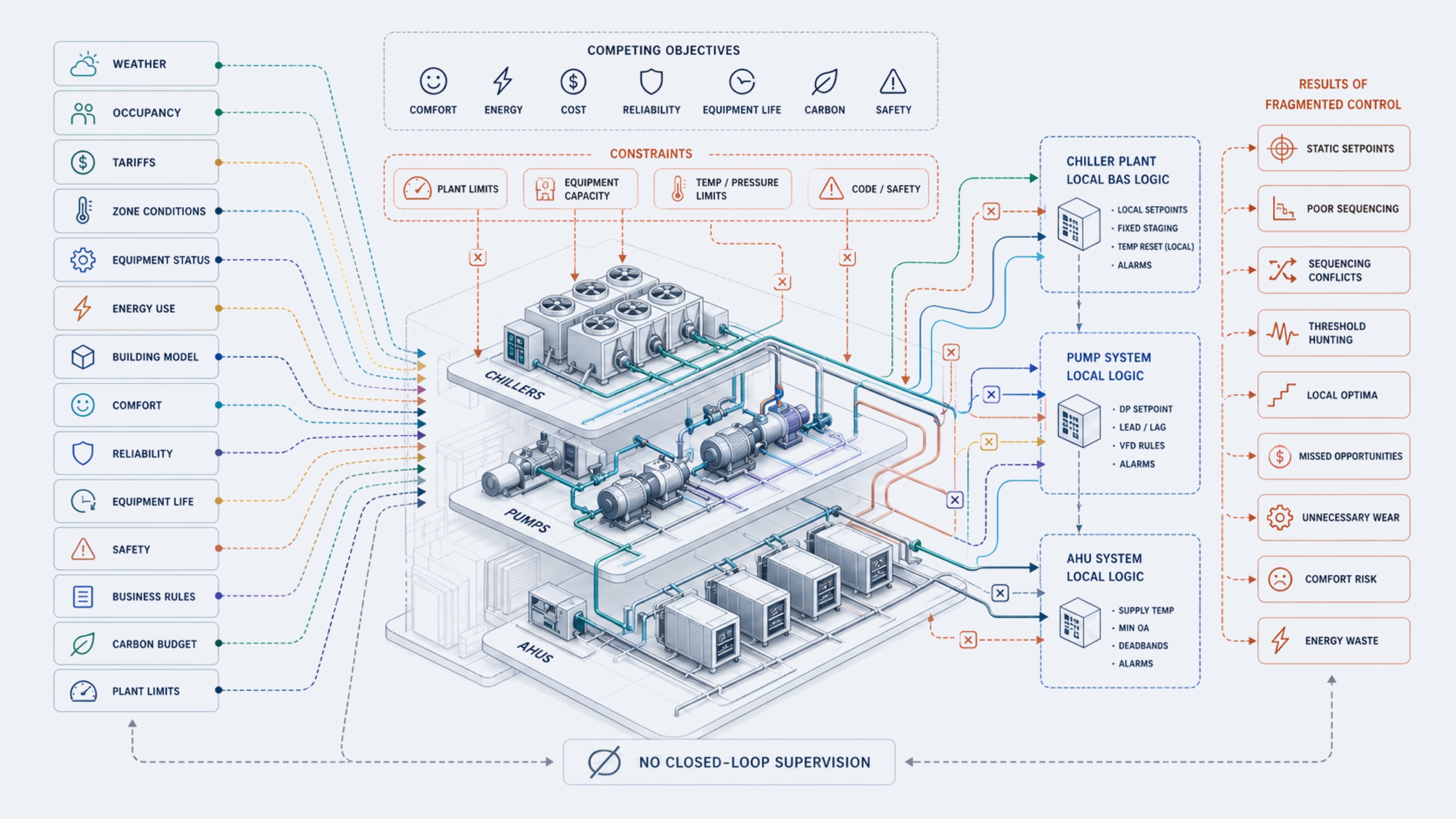
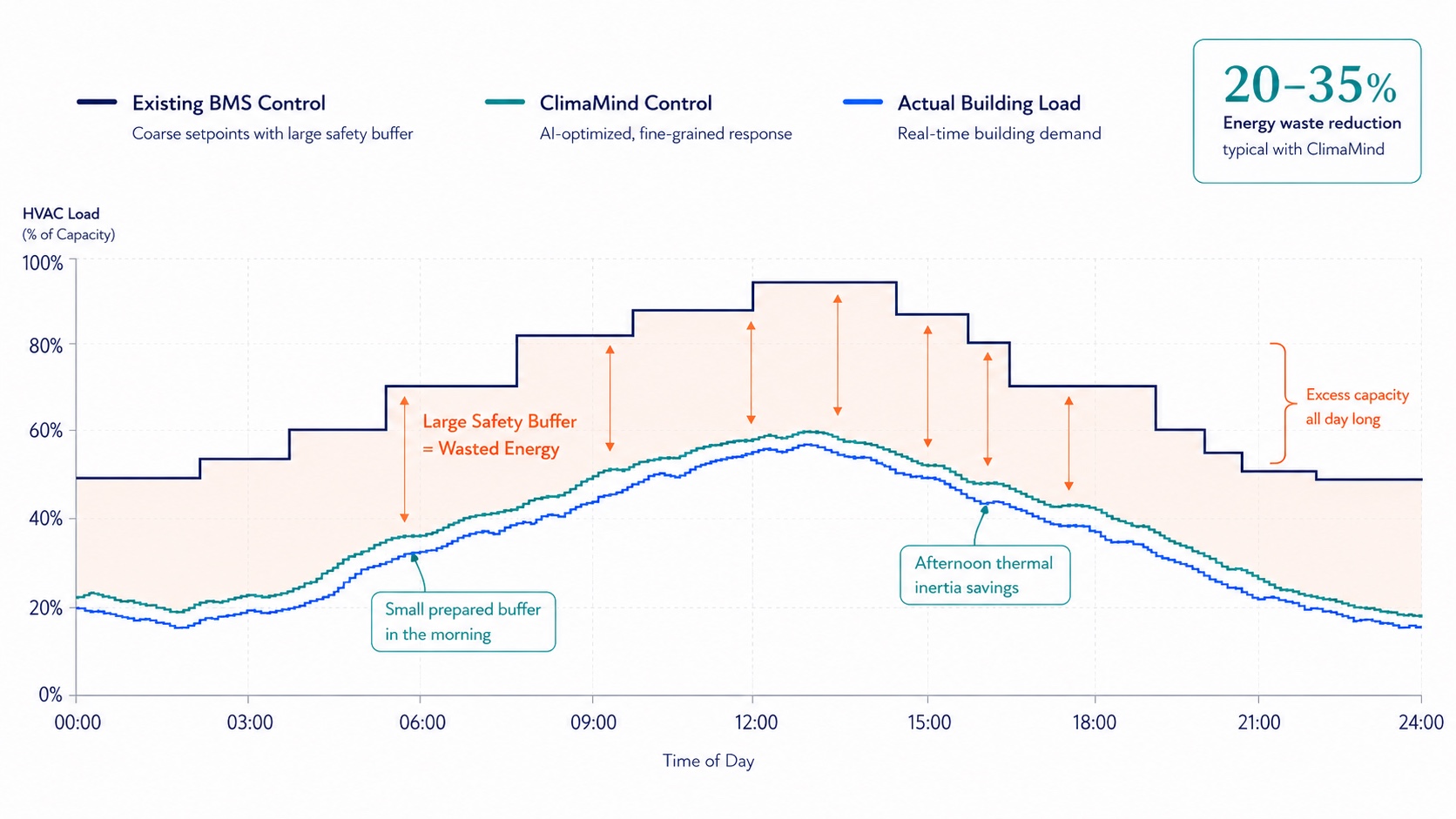
Add an AI control layer above your existing BAS to optimize chillers, pumps, cooling towers, and selected setpoints as one coordinated system.

Retained

Existing BAS

Maintained

Operator authority

  • Whole-system optimization instead of isolated equipment tuning
  • No BAS rip-and-replace and no replacement of the existing controls stack
  • Operator-visible approvals, guardrails, and fallback paths

What we optimize

Plant-wide cooling control

The solution is designed around the operating system you already have in the field, then extended with supervisory logic that can coordinate the assets that matter most.

ClimaMind AI Overlay

A supervisory layer evaluates live conditions and recommends plant-level setpoints without replacing existing controls.

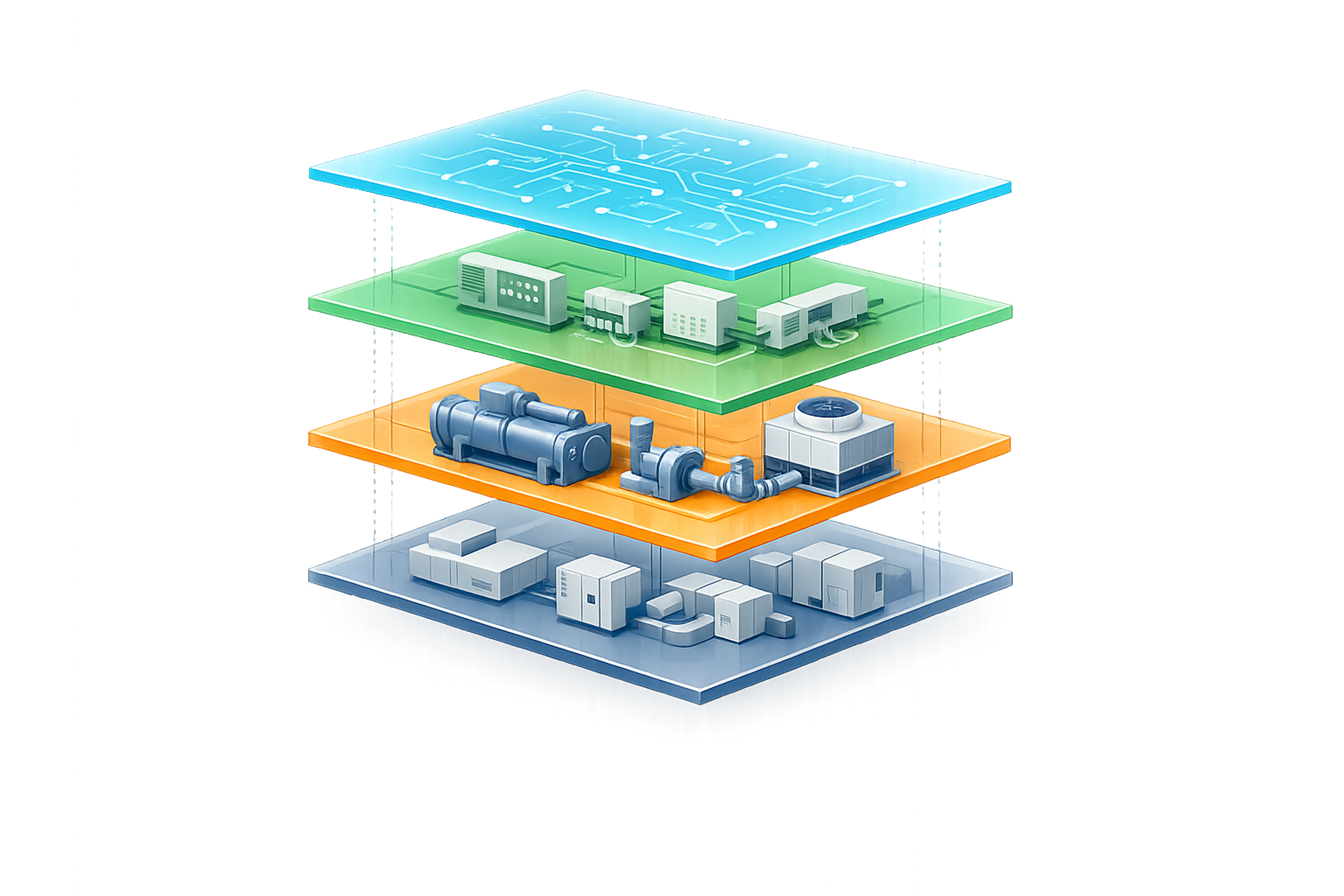
Four-layer ClimaMind AI overlay architecture

Existing BAS/BMS

The BAS remains the operating interface and native control layer. Operators keep visibility, overrides, and local authority.

Optimized HVAC equipment

ClimaMind focuses on the assets that drive plant energy: chillers, pumps, towers, storage, and selected system setpoints.

Non-optimized building systems

Adjacent systems stay outside the optimization boundary unless they are explicitly mapped into the deployment scope.

Secure intervention

Safety strategy by design

Before AI writes to the BAS, ClimaMind can start in advisory mode, define hard limits, apply bounded tuning steps, and preserve a clear path back to native BAS control.

Advisory mode

ClimaMind can begin by recommending setpoint changes without writing to the BAS.

01

Hard safety boundaries

Commands outside authorized equipment limits are rejected automatically.

02

Small-step tuning

Gradual, rate-limited adjustments avoid aggressive transients.

03

AI/BAS handoff

Operators can return control to BAS while fail-hold preserves safe operation.

04

Deployment path

Safe BAS rollout

Optimize inside guardrails; keep BAS control.

Step 1

Data intake and point mapping

Capture schematics, equipment inventory, point lists, and control boundaries before any write path is enabled.

Step 2

Edge appliance beside the BAS

Deploy a site-resident edge appliance that reads the live system and integrates with the existing BAS architecture.

Step 3

Guardrails and operator approvals

Define authorized points, approval steps, rate limits, and fallback behavior with site operators in the loop.

Step 4

Continuous optimization

Move from observation to controlled optimization at the pace the site can support, with rollback visibility preserved.

High-tech server rack

Operational guardrails

Visible control boundaries, not hidden automation

The operating model keeps native BAS authority and human takeover inside the same frame as the AI layer.

How value is measured

Audit-ready savings

Measurement fits the site's operating constraints, metering, and commercial boundary so results can be reviewed by operators and sponsors.

Alternating-day comparison

Used where site operations allow a controlled comparison between baseline and optimized operation.

Historical or baseline analysis

Used when direct A/B cycling is not practical and the site needs a baseline-based reporting path.

Energy and cost reporting

Ties plant performance back to the metering and utility context the customer actually manages.

Control-log traceability

Keeps the setpoint and operating record available so measured outcomes can be tied back to runtime decisions.

Meter-aligned

Energy reporting

Utility-aware

Cost reporting

The measurement package depends on site conditions, available data, and the agreed commercial boundary.

Commercial model

Two ways to work with us

Shared savings is the default. Cooling-tonnage pricing is reserved for long-term customers or sites with special procurement requirements.

Default

Shared savings

Payment aligns to measured savings when the site boundary and reporting data support it.

  • Measurement boundary agreed up front
  • Reporting tied to metering and utility context
Start with shared savings

Long-term / special requirements

Cooling-tonnage pricing

Available when a fixed cooling-tonnage basis fits a long-term customer relationship or procurement requirement better.

  • Fixed scope basis
  • Useful for special procurement constraints
Discuss tonnage pricing

Where it fits

Adaptive control for every site

The control layer stays conceptually consistent even when the facilities and operating constraints change.

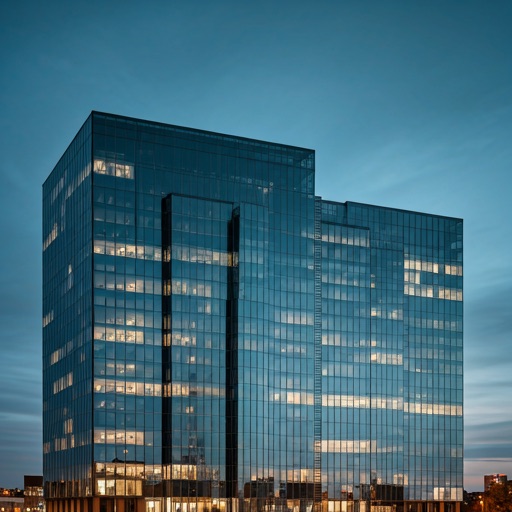
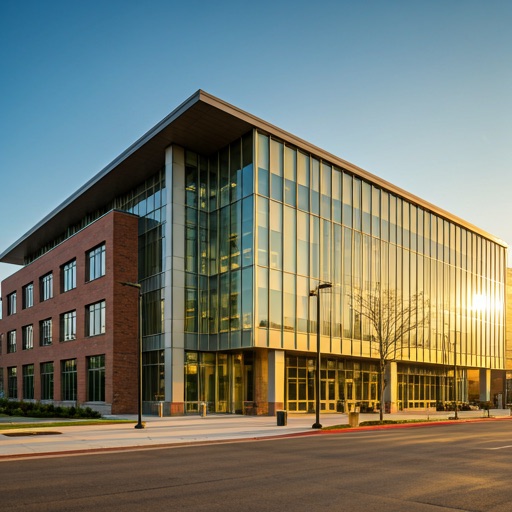
Office building exterior

Commercial buildings

Central cooling systems serving multi-tenant or comfort-sensitive operations.

University campus exterior

Campuses

Multi-asset environments with varying loads across buildings or thermal loops.

Hospital corridor

Hospitals

Reliability-sensitive environments that need explicit oversight and fallback paths.

Data center

Data centers

Cooling infrastructure where operator control boundaries and measurable outcomes both matter.

Deployment-readiness briefing

Start with the BAS you already trust.

Review control scope, guardrails, and measurement approach with our team before any closed-loop rollout.